
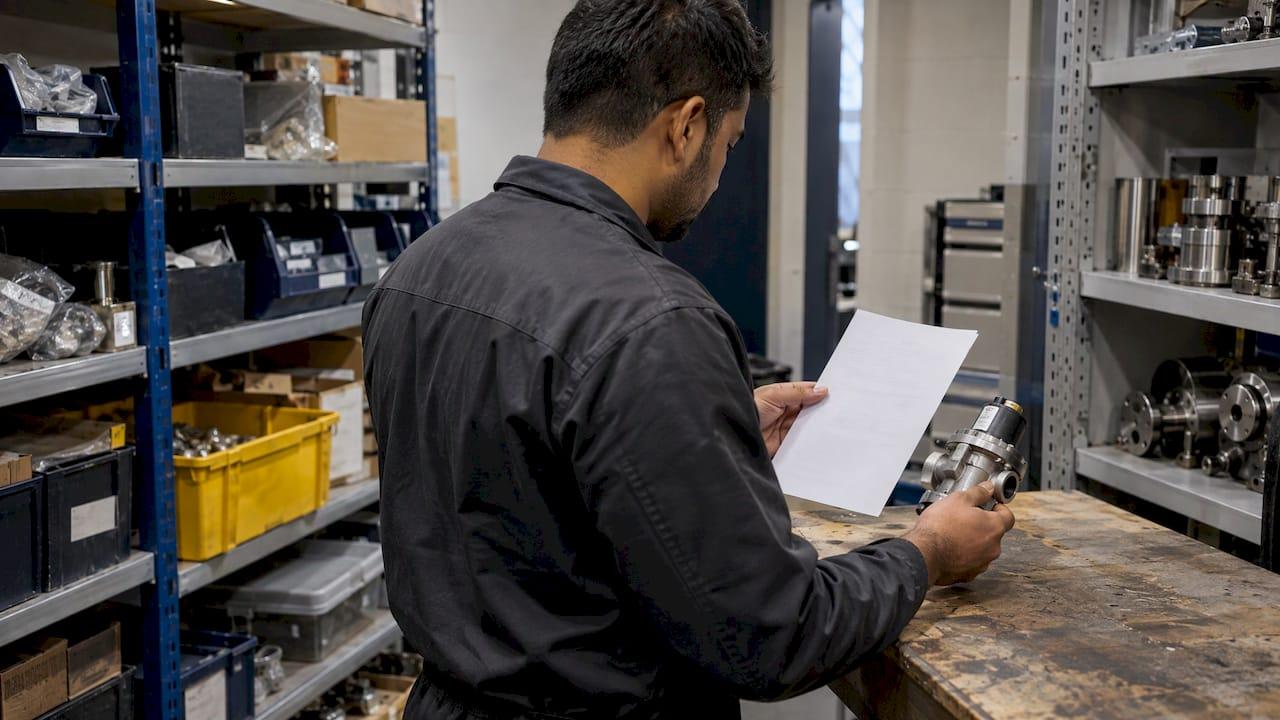
A recall or safety notice only protects anyone if someone at your firm matches it to the equipment, stock, sites and customers you actually have, then records what was done. Official bodies publish the notices. Working out which of your assets are affected, and proving you acted, is down to you. That is much easier when jobs, assets, stock and documents sit in one system, which is how we built Curcle for UK service and engineering businesses.
This guide explains what the different notices mean, where to check them, how to tell whether one touches your work, and what a defensible response looks like.
TL;DR
- A recall, a withdrawal, a product safety report and a safety alert are different things, issued by different bodies. Know which regulator covers your products.
- Product, food, vehicle and medical-device notices each have their own official list. Subscribe to the ones that cover your work rather than relying on news coverage.
- A notice only helps if you can match it to a make, model, batch or serial number on your asset and stock records.
- Keep a dated record of who saw the notice, what you checked, what you found and what you did. That record is your evidence.
- Connected asset, job and stock records turn a notice from a day of searching into a short query.
Table of Contents
- What the different notices mean
- Where to check for current notices
- Working out whether a notice affects you
- What to do when a notice may affect you
- Recording the response
- When you are the supplier: your own duties
- A worked example
- How Curcle helps you respond
- Our view: a notice is a data question
- FAQ
- Sources
What the different notices mean
The terms are used loosely in the press, but the official guidance separates them. OPSS, the Office for Product Safety and Standards, distinguishes three things:
- Product recalls apply to specific products sold in the UK.
- Product safety reports describe corrective measures other than a recall.
- Product safety alerts cover whole categories or sectors where there is a risk of serious injury or death.
Food has its own vocabulary. The Food Standards Agency (FSA) says a withdrawal removes unsafe food from the supply chain before it reaches consumers, while a recall also advises consumers to return or dispose of it. If you run commercial catering or kitchen maintenance, that difference decides who you must tell and what you say to customers.
Medical devices use field safety notices (FSNs). These come from the manufacturer, and MHRA says anyone who receives one must act on it. Vehicles have their own safety recall system run through DVSA.
For a service firm, the practical point is this: a notice may arrive about something you installed, something you stock, something you maintain on a customer's site, or a van your engineers drive. Each route has a different official source.
Where to check for current notices
No single list covers everything. The official sources most UK service businesses need are below.
| What | Where to look | What it gives you |
|---|---|---|
| Consumer and general products | OPSS Product Safety Alerts, Reports and Recalls | A searchable product list, with email updates when products are added |
| Food | FSA food and allergy alerts | Email notice of recalls, with the risk and advice for people who bought the food |
| Vehicles and parts | GOV.UK vehicle recall checker | Cars, motorcycles, buses, lorries, caravans, tyres, seat belts, components and agricultural equipment |
| Medicines and medical devices | MHRA alerts, recalls and safety information | Medicines recalls, device field safety notices and safety roundups |
| Medicines in Northern Ireland | Department of Health drug alerts | Medicines recalls and defect notifications |
Food Standards Scotland covers alerts for Scotland. Manufacturers also write directly to the customers they know about, but a letter can go to the wrong address or the wrong person, which is why a subscription to the official lists is worth having.
Set up alerts once, assign them to a person
Subscriptions only work if someone reads them. Choose the lists that match your sectors, route them to a shared mailbox rather than one person's inbox, and name the person who triages each one. An unread alert has no value, and an alert read by a person who is on leave has no value either.
Working out whether a notice affects you
Most notices describe a product by make, model and some form of batch, lot or serial identifier. Your job is to match that description against your own records.
For vehicles, the GOV.UK checker can search by registration number and shows outstanding safety recalls. Where you do not have a registration, you can search by manufacturer, model and year. If you run a fleet of vans, check each registration on a regular schedule, because a recall can be issued long after purchase.
For medical devices, MHRA guidance says a field safety notice should identify the device type, model, batch or lot, serial number, part or order number and, where available, the UDI and manufacture dates. A UDI is a unique device identifier, a code that identifies the exact device. If your records hold only a product name, you cannot answer whether a notice applies.
That is the common failure in service firms. The information needed to match a notice exists, but it is scattered: model numbers on a certificate, serial numbers in an engineer's photo, supplier details in a purchase email, site details in a spreadsheet. The question "have we installed this part anywhere?" becomes an afternoon of searching.
What you need on record to answer fast
- Asset register: make, model, serial number and location for every item you install or maintain.
- Job history: which engineer attended, on what date, and what was fitted or replaced.
- Stock records: what you hold now, from which supplier, and which batch.
- Site and customer details: who to contact, and for which site.
- Documents and photos: the data plate image or certificate that proves what was actually fitted.
In Curcle, assets and site registers, jobs, stock and document and photo capture are connected in one platform, so the engineer's data plate photo, the asset record and the job sit together. That matters at the moment a notice arrives.
What to do when a notice may affect you
The right action depends on the regime, but the pattern is consistent: stop the risk, identify who is affected, act on the notice, tell those who need to know, and record it.

Stop the risk first
For food, the FSA says businesses responsible for unsafe food should withdraw or recall it immediately and tell their local authority or port health authority. Where unsafe food has reached consumers, the FSA incidents team should also be told.
For vehicles, a vehicle with a serious safety defect must not be driven, and the manufacturer normally repairs or replaces the faulty part free of charge. Take the van off the road until the fix is done.
For medical devices, the FSN is the instruction. MHRA guidance says a well-formed notice should explain the hazard, tell users how to identify, quarantine, dispose of or modify affected devices, set completion timelines and provide a customer contact and acknowledgement form. Follow the steps as written, and put questions about the specific notice to the manufacturer.
Quarantine stock you hold
If the affected item is in your stores or in engineers' vans, mark it and separate it. A recalled part left in a van is a part that will be fitted on a Tuesday afternoon. Stock control that shows which batch is where, including van stock, lets you pull the right items rather than everything of that type.
Identify installed items and customers
This is the step that takes longest without good records. Search your asset register for the make, model and batch in the notice. List each match with its site, customer and the date it was fitted or last serviced. Then raise a job against each affected asset so the remedial visit is scheduled, assigned and tracked rather than held in someone's head.
Tell the people who need to know
Customers with affected equipment need a clear message: what the notice says, which of their assets are involved, what you will do and when. The FSA recommends consumer communications as part of a documented food incident process, and the same discipline suits any sector. Where a manufacturer asks you to pass information on, do so, and confirm receipt to them. MHRA's guidance says organisations should tell the manufacturer they received a notice, and that reply is evidence used to monitor progress.
Recording the response
A recall response you cannot evidence is, from an auditor's or customer's point of view, a response that did not happen. Official guidance is consistent on what good looks like.
The FSA recommends traceability, a documented decision process, defined roles, consumer communications and root-cause analysis after an incident. It also provides an example key decision log. Those habits carry over to any notice, whether it concerns a boiler component, a fire safety product or a refrigeration part.
For food records specifically, FSA material says businesses should keep supplier identity and address, product type and quantity and delivery dates, with batch or use-by details useful for fast identification.
A workable record for any notice contains:
- the notice reference, issuing body and date received;
- who reviewed it and when;
- the assets, stock and vehicles checked, and the result for each;
- actions taken, with dates and the person responsible;
- customer communications sent;
- confirmation to the manufacturer or regulator where required;
- the date the matter was closed, and anything you changed to prevent a repeat.
Audit trails matter here. A record that shows who changed what and when is far stronger than a summary written afterwards. Our guides on audit-ready reporting and compliance document retention cover how long to keep records and how to present them.
The same principle applies across regulated trades: when a defect is found, rectifying it and evidencing the fix are two separate jobs, as seen in sectors such as marine defect rectification.
When you are the supplier: your own duties
Some service firms also supply goods, for example selling and fitting components or equipment. If that is you, the duty runs the other way. OPSS's February 2026 guidance applies to businesses supplying goods on the GB market and says businesses must notify the relevant authorities when they become aware that a product is unsafe or noncompliant. A notification should include the product's identity, supply-chain information, test and risk-assessment summaries and any planned or completed corrective action.
OPSS also says a notification involving a recall or modification programme, or a product assessed as serious or high risk, is entered on the UK Product Recalls and Alerts website. Notifying the authority is a step the law gives to you. It is not optional and nobody can do it on your behalf in the eyes of the regulator, but the evidence you submit comes from your records.
In medical devices, the Medical Devices (Post-market Surveillance Requirements) (Amendment) (Great Britain) Regulations 2024 led MHRA to update its incident and field safety corrective action reporting processes so trends and new safety signals can be spotted more efficiently. If you handle devices, check the current MHRA guidance for your role.
A worked example
Suppose a manufacturer issues a notice on a batch of a pressure component used in commercial kitchen equipment. Your office manager reads the alert on Monday morning.
Without connected records, the manager emails engineers asking whether they have fitted the part, searches old job sheets by keyword, and calls the supplier to find which batch was delivered. By Wednesday there is a partial list, and nobody is sure it is complete.
With connected records, the manager searches the asset register for the model, filters by batch, and sees every affected site. Van stock is checked in the stock records and the matching items are quarantined. A job is raised for each affected asset, customers are contacted with the specifics, and every action is logged against the notice. The same afternoon, the manager has a list and a record.
The notice and the manufacturer's instructions are identical in both cases. The difference is whether your data lets you answer a simple question quickly.
How Curcle helps you respond

Curcle brings jobs, customers, engineers, assets, compliance, stock, quoting, invoicing and operational reporting into one connected system. Field teams and office teams work from the same information, and engineers capture documents and photos on a mobile app that works offline. When a notice lands, you can look to the asset and site registers, stock control and job history in the same place, and audit trails and audit-ready exports support the record you need to keep.
Curcle is built for UK field service, engineering, maintenance, facilities management, commercial catering, electrical and HVAC businesses. Plans start from £99 per month on Starter, with Professional from £249 per month and Business from £499 per month; Enterprise has no published price. See the plans and pricing or look at the features to see how assets, stock and compliance connect.

If you run multi-site contracts, our facilities management page shows how SLA and compliance tracking work across sites, and the HVAC page covers F-Gas and planned maintenance. Our guide to embedding field service compliance explains how to make these routines part of everyday operations, and the article on warranty claim tracking shows how to follow a faulty part through to a manufacturer's remedy.
Our view: a notice is a data question
Most firms treat a recall as an email problem. Someone reads it, someone forwards it, and everyone assumes someone else checked. In our experience of running a service and engineering business, that is where things go wrong.
A recall is really a data question: which of our assets, which of our stock, which of our customers? If the answer lives in five places, it takes days and you cannot be sure it is complete. If it lives in one place, it takes minutes and you can prove it.
That is why we built Curcle around connected jobs, assets, stock and compliance. Every click should earn its place, and software should help you see what needs attention rather than just record what has already happened. AI should assist your judgement, not replace it: you decide what a notice means for your customers, and the platform gives you the facts to decide with.
When a regulator, an insurer or a customer asks what you did, the audit trail should already be there, not reconstructed from memory.
Luke Herridge
FAQ
What is the difference between a recall and a safety notice?
A recall removes or corrects specific products already sold or supplied, and often asks owners to stop using them. A safety notice is a wider term. It may be a manufacturer's field safety notice for a medical device, or an OPSS alert about a whole category of product. Check the issuing body's guidance for the exact meaning in your sector.
Where can I check current UK recalls?
Use the official list for each area: OPSS for general products, the FSA for food, the GOV.UK vehicle recall checker for vehicles and parts, and MHRA for medicines and medical devices. Each lets you search, and several offer email alerts, so you can subscribe to the lists that match your work.
How do I know if a vehicle in my fleet is affected?
Enter each registration number into the GOV.UK vehicle recall checker, which shows outstanding safety recalls. If a vehicle has a serious safety defect, it must not be driven, and the manufacturer normally fixes it without charging for repairs or parts. Repeat the check regularly, as recalls can be issued at any time.
What should I record when I act on a notice?
Record the notice reference and date, who reviewed it, which assets, stock and vehicles you checked, what you found, what you did and when, what customers were told and when the matter closed. Dated, attributable entries carry far more weight than a summary written later.
Sources
- Product Recalls and Alerts, GOV.UK
- Food incidents, product withdrawals and recalls, GOV.UK
- Recalls and alerts, GOV.UK
- Check if a vehicle, part or accessory has been recalled, GOV.UK
- Alerts, recalls and safety information: medicines and medical devices, GOV.UK
- Drug Alerts 2026, Department of Health Northern Ireland
- Field safety notices: guidance for manufacturers, GOV.UK
- Field Safety Notices: 02-06 February 2026, GOV.UK
- What are FSNs and FSCAs? MHRA flyer
- Your first steps to running a catering business, FSA guidance
- Product Safety and Noncompliance Notification Guidance for Business, OPSS
- MORE Incident Submissions user reference guide, MHRA