
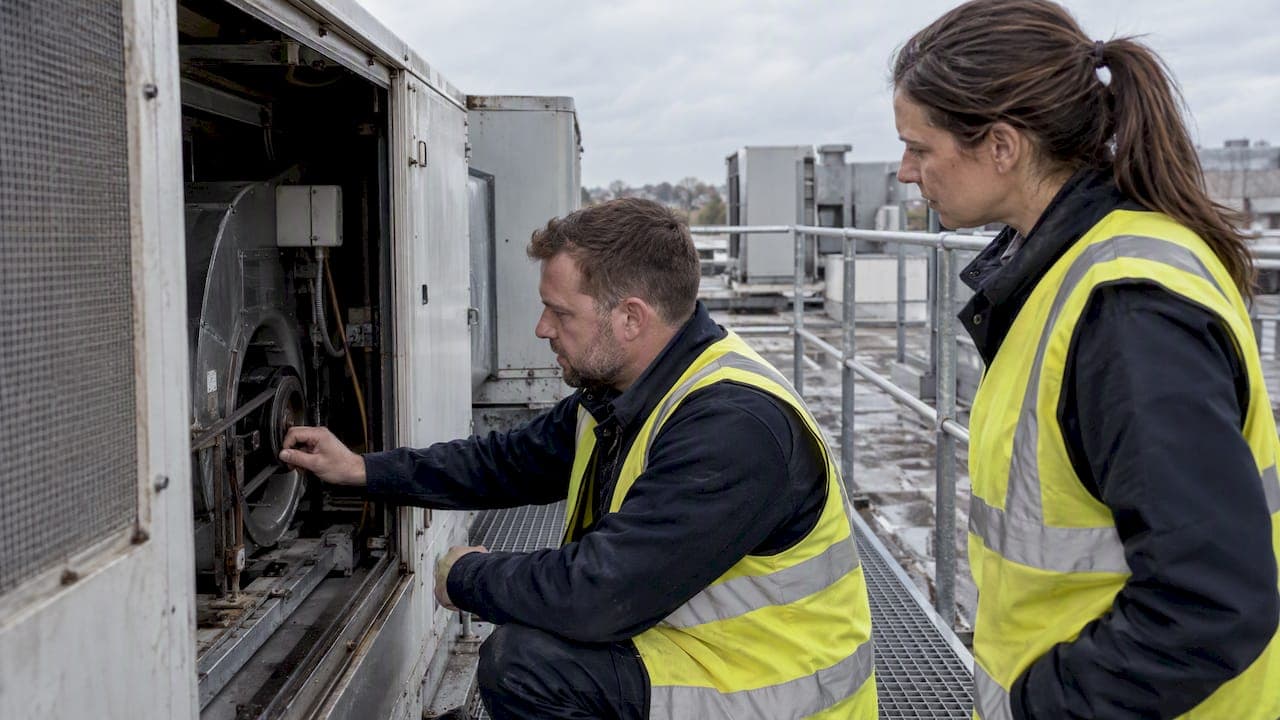
SFG20 is the UK industry standard set of maintenance schedules for building services, and it works as the baseline for any planned preventive maintenance (PPM) programme. Use the published schedules as your starting point, then adjust frequencies for site-specific risk, usage and environment. Keep clear, dated records so you can evidence maintenance against PUWER and HSE expectations whenever an auditor or tenant asks.
TL;DR:
- Adjust SFG20 frequencies based on site-specific risks, usage patterns, and environmental conditions, rather than relying solely on standard intervals.
- Maintain a comprehensive, up-to-date asset register with clear records of installation details, safety-critical flags, and service histories for audit readiness.
- Use a digital platform to automate scheduling, logging, and exporting compliance certificates to reduce administrative effort and improve traceability.
- Review maintenance schedules whenever site conditions, manufacturer guidance, or legislation change to ensure ongoing safety and compliance.
- Store signed checklists, timestamps, and certificates against each asset to verify maintenance and facilitate quick responses during audits or tenders.
Table of Contents
- What SFG20 maintenance schedules are: scope, structure and deliverables
- Why SFG20 matters for UK legal compliance and duty holders
- Typical SFG20 schedules and service intervals for common assets
- How to implement SFG20 schedules across your estate
- Where to find official SFG20 schedules and further guidance
- Making SFG20 workable at scale
- How Curcle helps put SFG20 schedules into practice
- FAQ
- Sources
What SFG20 maintenance schedules are: scope, structure and deliverables
SFG20 provides standardised task descriptions and frequencies intended to form a baseline PPM schedule for building services, and it is widely used across the UK property and facilities sector. Each schedule entry sets out a specific task, a recommended frequency and the deliverable or output expected once the work is done, whether that is a signed checklist, a reading, or a certificate.
The specification spans the full range of building engineering services, so a facilities team can draw on one source for mechanical plant, electrical distribution, HVAC systems, lifts, fire detection and suppression, and plumbing and water systems. Each schedule reads like a short job description:
- Task: what needs inspecting, testing or servicing, described in plain engineering terms.
- Frequency: how often the task should happen, from daily checks to multi-year overhauls.
- Deliverable: the record or certificate that proves the work was carried out.
Once you have mapped an SFG20 entry to a physical asset, it converts directly into a PPM job: a recurring task with a due date, an assigned engineer and an expected output. That output becomes part of your compliance paper trail, whether it is a logged reading, a completed checklist or a formal certificate such as an EICR or LOLER report.
Why SFG20 matters for UK legal compliance and duty holders

The Provision and Use of Work Equipment Regulations 1998 (PUWER) set out two duties that sit behind most SFG20 conversations. Regulation 5 requires employers to keep work equipment maintained in an efficient state, and Regulation 6 requires periodic inspection to catch deterioration before it creates a risk. Both duties fall to a competent person, someone with the practical and theoretical knowledge to judge what maintenance and inspection a specific piece of equipment needs.
SFG20 gives duty holders an industry-recognised way to demonstrate that equipment is "maintained in efficient order", but it does not replace professional judgement. The HSE's Approved Code of Practice L22 is clear that inspection frequency should reflect intensity of use, environment and risk, not simply a generic interval pulled from a specification sheet.
Facilities and compliance teams must still ask whether their site's conditions, usage patterns and manufacturer guidance justify tightening or relaxing a standard SFG20 frequency.
Procurement teams already treat SFG20 as a reference point. A Scottish government facilities management contract schedule cites SFG20 as the maintenance specification bidders must work to, which shows how embedded the standard has become in public-sector tendering.
Typical SFG20 schedules and service intervals for common assets
SFG20 frequencies run from daily visual checks through to multi-year strip-downs, grouped broadly into daily, weekly, monthly, quarterly, six-monthly, annual and multi-year bands. Daily and weekly checks tend to be simple visual or operational tests; quarterly and annual tasks involve calibration, thorough inspection or component replacement; multi-year tasks often mean a full overhaul or statutory thorough examination.
Applied to common building services, that structure looks like this:
- HVAC: filter checks and replacement at regular intervals, with a full service and performance check annually.
- Electrical distribution: regular visual inspections, supplemented by thermal imaging and a more thorough periodic inspection.
- Fire detection and suppression: periodic alarm tests and servicing of detectors and call points, plus a full system check on an annual basis.
- Lifts: routine visual and operational checks, along with statutory servicing as per regulatory requirements.
- Water hygiene: ongoing temperature monitoring and legionella risk assessments, with frequency adjusted according to system risk.
Maintenance frequency should reflect intensity of use, environment and risk rather than a fixed default, according to HSE guidance on PUWER: a plant room running continuously in a humid environment needs tighter intervals than the same equipment in light, intermittent use.
That principle should drive every adjustment you make to a baseline schedule. A rooftop air handling unit exposed to coastal salt air, a lift in a busy shopping centre, or electrical switchgear in a food production environment all wear faster than the same assets in a quiet office. Safety-critical components, such as fire dampers or emergency lighting batteries, generally warrant the tighter end of any recommended range, and manufacturer guidance should always be checked against the SFG20 baseline before you finalise a frequency.
How to implement SFG20 schedules across your estate
Rolling SFG20 out across a real estate portfolio is less about the specification itself and more about disciplined asset management. A workable sequence looks like this:
- Build a complete asset register, recording location, make, model, installation date and a safety-critical flag for each item of plant.
- Map SFG20 tasks to each asset, noting where manufacturer intervals or local risk factors justify a tighter or looser frequency than the standard schedule.
- Set frequencies in your PPM system and assign the work to competent in-house staff or vetted contractors with the right certification.
- Record every completed task in a log, retain certificates centrally, and apply change control whenever a frequency is adjusted, so there is a clear trail showing why and when it changed.
Pro Tip: Store photographic evidence alongside signed checklists; a timestamped photo of a completed task is often the fastest way to satisfy an auditor without a site visit.
When a tender or audit lands on your desk, the evidence you need should already exist rather than need assembling under pressure. Exportable PPM reports, signed checklists and dated certificates, organised by asset, let you respond to a procurement question or an insurer's request in minutes rather than days. Clear LOLER thorough examination records and an up-to-date PAT testing register are two of the most commonly requested documents, so keeping them current pays off well beyond the immediate compliance task.
Where to find official SFG20 schedules and further guidance
The canonical source for the specification, including downloadable schedules and updates, is the official SFG20 website. For the legal framework behind maintenance and inspection intervals, the HSE's PUWER overview and its accompanying Approved Code of Practice L22 remain the primary references for competent persons setting frequencies.
- Check the SFG20 website directly for the latest schedule revisions before finalising a PPM plan.
- Cross-reference HSE guidance when a site's risk profile might justify departing from a standard interval.
- When referencing SFG20 in a tender or contract, confirm the specification's licensing terms with the provider before copying schedules into bid documents.
Making SFG20 workable at scale
Most of the frustration with SFG20 has nothing to do with the schedules themselves. It comes from fragmented spreadsheets, ad hoc frequencies nobody can explain, and no quick way to prove a job was actually done. A single source of truth for assets, schedules and certificates removes most of that friction and makes every audit a formality rather than a scramble.
— Luke Herridge
How Curcle helps put SFG20 schedules into practice
We built our platform around exactly this kind of operational friction: disconnected asset records, manual frequency tracking and certificates scattered across inboxes. With an appropriate system, you hold one asset register, schedule recurring SFG20-based jobs against it, assign the right contractor or engineer, and export certificates the moment a job closes.

- Asset register: every piece of plant in one place, with safety-critical flags and service history.
- Recurring jobs: SFG20 frequencies set once, then scheduled automatically.
- Audit-ready exports: signed checklists and certificates ready for a tender or inspection.
| Benefit | What it means in practice |
|---|---|
| Less admin | Schedules run automatically instead of being tracked manually |
| Stronger audit trail | Certificates and logs are stored against each asset |
| Faster tender responses | Compliance evidence exports in minutes |
Our Professional plan starts from £249 per month, with Starter from £99 for smaller teams. Take a look at our features or explore facilities management support to see how it fits your estate.
FAQ
What is SFG20 and who publishes it?
SFG20 is the UK's industry-standard specification for planned maintenance of building services, published and maintained by the SFG20 provider. It sets out recommended tasks and frequencies for mechanical, electrical, HVAC, fire, lift and plumbing systems.
Is following SFG20 a legal requirement?
SFG20 itself is not a statutory document, but it offers a recognised way to meet duties under PUWER, which requires equipment to be maintained in an efficient state and inspected periodically. A competent person still needs to judge whether site conditions justify adjusting the standard frequencies.
How often should SFG20 schedules be reviewed?
Schedules should be reviewed whenever legislation, manufacturer guidance or site conditions change, and whenever an asset's usage pattern shifts significantly. The HSE's L22 guidance recommends keeping maintenance logs for high-risk equipment so that any frequency change is backed by a documented reason.
Can SFG20 schedules be managed in a CMMS?
Yes, SFG20 tasks and frequencies convert directly into recurring jobs within a computerised maintenance management system, which removes the need to track intervals manually. A platform such as Curcle's building maintenance software lets you map each schedule entry to an asset and generate the certificate or record it requires automatically.
What records do I need to prove SFG20 compliance?
You need dated maintenance logs, signed checklists, and certificates for each statutory inspection, stored against the relevant asset. Exportable records, such as a PAT testing register or a LOLER examination checklist, are the documents most often requested in audits and tenders.
Sources
- Safe use of work equipment: Provision and Use of Work Equipment Regulations 1998 (PUWER) – HSE overview
- Facilities Management Services Contract SCHEDULE 1 — example procurement document referencing SFG20